 17 October 2025


Motion detectors are one of the fundamental components of security and automation systems. In this article, we covered key points ranging from the functions and operating principles of motion detectors to their areas of use and tips for making the right choice. Motion detectors integrated with modern security systems enhance the level of protection, offering more comprehensive security. Discover Atlastek’s expert solutions in our blog to take your safety to the highest level.
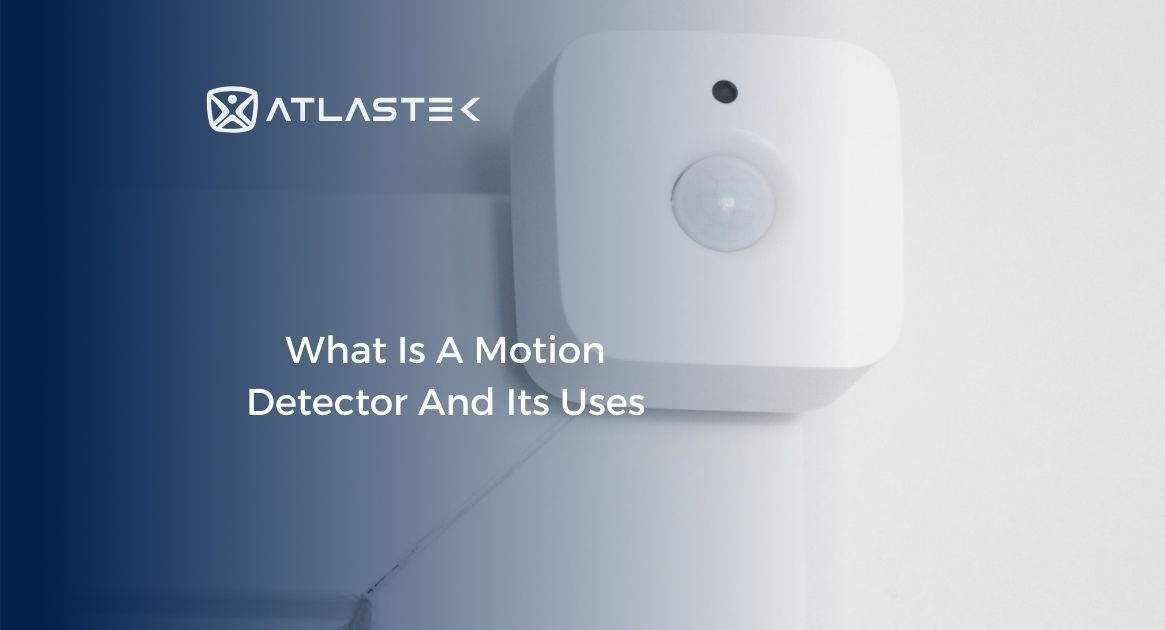
A motion detector is an electronic device that senses movement within a defined area and activates the connected security or automation system. These detectors are produced using infrared (PIR), microwave, or dual-technology sensors.
Their main purpose is to detect motion and trigger a system response. This could include activating an alarm in the event of unauthorized entry, switching on lights, or initiating video recording. Since they only activate systems when motion is detected, they also prevent unnecessary energy consumption. In smart home applications, they enhance both security and comfort by automating device operations.
Motion detectors continuously scan the area in which they are installed and activate the connected system when movement is detected.
The sensors on the device monitor changes in the environment. PIR sensors detect heat differences and identify humans or animals entering the coverage area. Microwave sensors emit radio waves to scan the area and analyze changes in the way the waves are reflected.
When detection occurs, the detector transmits this information to the alarm panel or automation system. The system then responds according to the pre-defined scenario, such as activating the alarm, turning on the lights, or starting the cameras to record.
Dual-technology detectors evaluate data from both PIR and microwave sensors together and send a signal only when both confirm the motion. In this way, the risk of false alarms is minimized.
Motion detectors are widely used across different environments, including:
Home security
Office and retail security
Building automation
Industrial facilities
Outdoor perimeter protection
By combining safety with convenience and energy efficiency, motion detectors deliver value beyond basic security.
Detect heat changes; widely used in indoor applications.
Use radio waves to sense movement, ideal for larger coverage areas.
Combine PIR and microwave, minimizing false alarms.
Provide 360-degree coverage, commonly used in offices and retail.
Weather-resistant, suitable for gardens and perimeter security.
Choosing the right detector depends on the installation environment (indoor/outdoor), the size of the monitored area, and the specific security requirements.
Assess the requirements of the intended location.
Sensitivity, detection range, and angle of coverage are critical factors.
Weather resistance and false alarm prevention capabilities are essential.
Select between PIR, microwave, or dual-technology detectors.
The right model ensures top performance after installation.
Energy-saving models that integrate with smart systems provide added benefits.
Dual-technology detectors require confirmation from both PIR and microwave sensors, significantly lowering the chance of false alarms.
They activate systems only when motion is detected, preventing unnecessary energy use while enhancing security.
Yes. Weatherproof models are specifically designed for outdoor security.
PIR, microwave, and dual-technology sensors are available to meet different security needs.