 17 October 2025


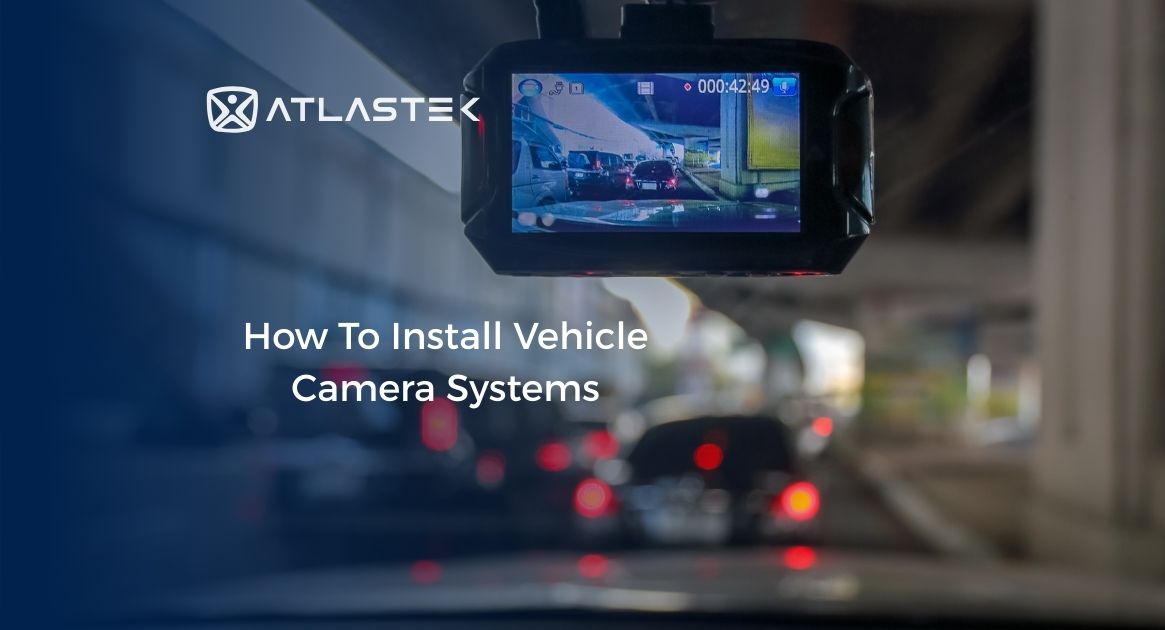
Today, vehicle security is important not only while driving but also when parked. At this point, vehicle camera systems take security to the next level by providing drivers with continuous monitoring and recording capabilities. Atlastek Security Systems, with its advanced technology solutions, meets the needs of both individual and corporate users and addresses security with an integrated approach through vehicle camera systems. In this article, we covered the working principles of vehicle camera systems, their features, how recordings are monitored, and the installation process of vehicle camera systems.
Vehicle camera systems start recording automatically when the ignition is turned on. Powered by the vehicle’s electrical system, the device stores footage on a memory card throughout the journey.
Recordings are saved in segments, and when the card is full, older files are overwritten to ensure continuous recording.
In the event of sudden impact or vibration, the sensor is triggered, and that specific recording is protected from being erased. When the vehicle is parked, motion detection activates the system, capturing potential risks.
This functionality provides drivers with reliable footage both during travel and while parked.
Ensures clear, detailed video recordings.
Provides reliable footage in low-light conditions.
Creates protected files during collisions, preventing them from being deleted.
Records vehicle speed and location for driving analysis.
Enables quick transfer of footage to mobile devices.
Installation begins by positioning the cameras at the correct angles. The front camera is mounted behind the rearview mirror, while the rear camera is fixed to the upper part of the rear window.
Cables are routed through the headliner and trim panels, ensuring both an aesthetic finish and protection against external factors.
Power is typically connected through the fuse box or cigarette lighter socket, ensuring uninterrupted operation.
Once installation is complete, camera angles are checked, test recordings are made, and easy access to the memory card is ensured.
For enhanced safety, Atlastek integrates vehicle camera solutions with CCTV systems, offering a broader security network. Proper installation ensures long-lasting and reliable performance.
Recordings can be viewed by removing the memory card and accessing it on a computer or mobile device. Wi-Fi-enabled models allow direct transfer to smartphones, while advanced systems with cloud storage provide remote access to footage over the internet.
This feature is especially useful for fleet management, enabling tracking of driver behavior and routes. Proper installation ensures recordings are captured smoothly and viewed without issue.
The price of a vehicle camera system largely depends on its technical features. Higher resolution, night vision technology, and G-sensor technology directly impact cost. Models equipped with GPS for speed and location tracking, or Wi-Fi for mobile transfer, are priced higher.
Yes, vehicle cameras can be used for personal security. However, sharing or publishing footage must comply with data protection laws.
Recording time depends on the memory card capacity. For example, a 64GB card can store around 8–10 hours of Full HD footage.
In models with screens, an error message appears. In screenless devices, a lack of saved files on the memory card indicates malfunction.
These systems can be adapted to all vehicles—from cars and trucks to buses and commercial fleet